Sunday, January 31, 2010

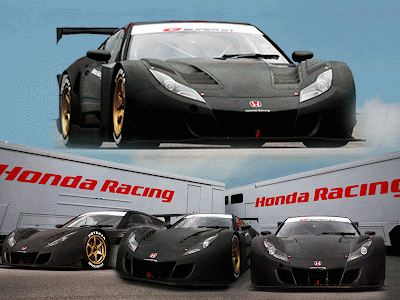
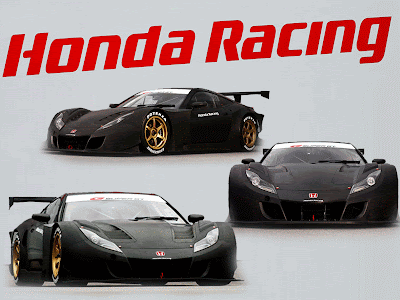
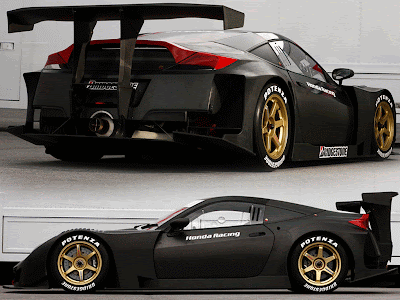
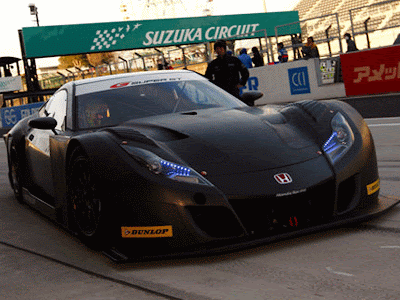
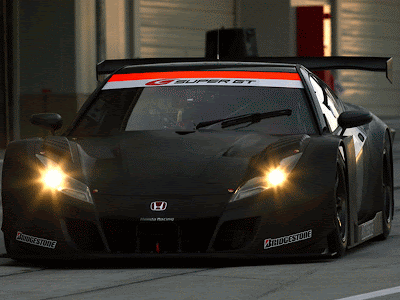
2010 Honda Racing HSV-010 Super GT (Spec and Picture)

2010 Honda Racing HSV-010 Super GT

2010 Honda Racing HSV-010 Super GT

    2010 Honda Racing HSV-010 Super GT
    2010 Honda Racing HSV-010 Super GT
    2010 Honda Racing HSV-010 Super GT
    2010 Honda Racing HSV-010 Super GT
Honda Motor Co., Ltd. introduced the Honda HSV-010 GT, which will compete in the GT500 class of the 2010 Super GT Series.

Honda HSV-010 GT Technical Specifications :
    - Dimensions
          * Length: 4675 mm
          * Width: 2000 mm
          * Vehicle weight: 1100+ kg
    - Engine
          * Engine name: HR10EG
          * Configuration: Liquid-cooled, naturally aspirated, longitudinal V8
          * V angle: 90°
          * Valve train: Gear-driven DOHC - 2 intake and 2 exhaust valves per cylinder
          * Displacement: 3397 cm3
          * Bore x stroke: 93.0 x 62.5 mm
          * Maximum output: 500 PS (370 KW)
          * Maximum torque: 392 Nm
          * Throttle control system: Mechanical
          * Fuel supply system: Programmed fuel injection system (Honda PGM-FI)
          * Fuel: Lead-free premium gasoline
          * Lubrication: Dry sump
    - Powertrain
          * Transmission mechanism: Constant mesh
          * Transmission shifting method: Steering paddle shifter
          * Steering system mechanism: Rack and pinion system with electric power steering (EPS)

    - Tires
          * front: 330/40R18
          * rear: 330/45R17
    - Brake type and mechanism: Hydraulic ventilated disc system
    - Suspension system: Double wishbone
    - Stabilizer: Torsion bar

Friday, January 29, 2010

First Drive: Bentley Continental Supersports

Bentley Continental Supersports

In the superluxe world, we're used to this maneuver: add a few horsepower, shave a tenth or two, sew in a few extra threads, name your exclusive new interior color something like "Algerian Beet" and voilà, a 50-percent price premium for three-percent more car. On the surface, the Bentley Continental Supersports is a GTC Speed that has gone on The Biggest Loser, Extreme Makeover, and Alter Eco. But you know what they say about the proof and the pudding, so the question is whether the Supersports is a nameplate special or a genuinely higher evolution of the baller's favorite steed. We spent a day in the wilds of New Jersey and upstate New York, along with a few hours at Monticello Raceway to find out. Ladies and gentlemen, allow us to introduce you to the first Continental you can feel.

Think of the Bentley Continental Supersports as Usain Bolt: both are hypothetically too big to perform as they do, but they do it anyway.

The Continental GT is not a sports car. Nor is the Continental Supersports. Nevertheless, both Bentleys do things that only sports cars can do, and the Supersports does some of them more quickly – like 0 to 60 in 3.7 seconds. The difference is in how they do it. In our review of the GTC Speed, we wrote that it achieves these feats by taking the goddess of physics hostage, forcing her to obey. Bentley should be commended for engineering a 5,182-pound beast to perform such feats at all, but it remains an act of coercion.

In the GTC Speed, though, the driver is separated from all that imperative violence by multiple layers of sound deadening, carpeting, wood and leather. If you really pay attention, you can catch a soupcon of the brute force wizardry being conducted somewhere in the Bentley's deathly hallows, but why would you? There are 1,100 distracting watts of Naim audio to command the ears and a woman named Katerina or Genevieve or Summer in the front seat to command everything else.


The Supersports, on the other hand, requests your attention. Why? While the conversion to being a high-po ethanol coupe does involve more electro-mechanical magic, it's primarily achieved the old fashioned way: less weight and more power.

A 243-pound reduction from a 5,000-pound car isn't much – 4.86 percent, to be exact – but the Supersports drops weight in the right places. Unsprung mass has been reduced by 66 pounds with the addition of carbon-ceramic brakes and lightweight wheels, while the chassis gives up 20 pounds and the elimination of the rear seats, replacement of the wood with carbon fiber trim and the fitment of those carbon fiber seats nixes nearly 160 pounds. But a strict diet isn't the only regime Bentley put the Supersports on.

Output is up to 621 horsepower at 6,000 rpm – another 21 hp over the GTC Speed – thanks to an increase in boost pressure, with torque goosed (or would that be 'swanned') from 553 foot-pounds to 590 ft-lb at 2,250 rpm, making this "extreme Bentley" the most powerful model to wear The Flying B. Your new corn-fed top speed: 204 miles per hour. An even better stat: you can get from 50 to 70 mph in 2.1 seconds. Worry not, cellulosic stocks will work as well if you're concerned about things like, oh, world hunger.


Speaking of which, let's throw our bingo chip down right now on the second biggest story of this car: E85. (Yes, that means we're actually playing bingo.) This is the first Bentley with flex-fuel capacity, the first arrow in what is meant to be a quiver full of eco-friendly Bentleys by 2012 (or at least less eco-injurious).

This Bentley is Battle Cat. You know, the green guy He Man used to ride.
At the 2008 Geneva Motor Show, company CEO Dr. Franz-Josef Paefgen spoke of the strategy to make the entire fleet capable of running on renewable fuels. Typical of a high-zoot Volkswagen endeavor, the W12 heart has been thoroughly engineered for the task. The dictate was that no matter the ratio of gasoline to biofuel, the car would maintain its peak horsepower and torque numbers, and the corrosive aspects of biofuels couldn't be allowed to eat the engine. That meant changes to the entire fuel management system, twin variable-flow fuel pumps, new valve coatings and valve seat materials, new spark plugs and new O-rings, seals, gaskets and pipes. The overlord is a fuel quality sensor that detects the gas-to-ethanol mix and automatically adjusts engine mapping based on the content of each. To note: European Supersports deliveries are fitted with the FlexFuel engine now, while North American models need regulatory approval, which should make them available by the end of summer.

All that oomph makes the Supersports a heavy breather, the bi-turbo W12 needing 10 percent more airflow to remain cool. That's the reason for the exterior redesign up front, with the lateral intakes feeding intercoolers and the hood vents extracting hot air from above. Another upshot: the changes create more downforce in front.


But let's take that concept of 'down in front' to the cabin. As we all know, it's the details that define the superior product – and even more detailed details that make this year's superior product better than last. By that standard, the Supersports is noticeably better, the sum of its changes having recast the entire tone of the Continental GT, which is itself better than almost everything else out there.

Flood the optical nerves with padded carbon seats, Alcantara, leather and carbon trim, and the brain's signal processing center immediately switches to its "Sports Car" setting. A simple viewing also ushers in the thrill of trying to simultaneously process pole and antipole: the cabin is as spartan as it is luxurious, clinical as it is inviting, hard as it is soft.

The leather-trimmed carbon fiber seats have fixed seat cushions and clamshell rear panels that can adjust fore and aft. This is the first Bentley to wear Alcantara inside, and a smaller diamond-quilt pattern makes its return after a long absence. The steering wheel is lined in soft-touch leather so that your fingers are always sending you the signal, "Remember, we're here on business." It's a cabin good for all-day comfort on the eyes, the body and the driving soul.


And perhaps you noticed that missing rear seat. In its place is a luggage shelf topped by a hollow carbon tube that keeps parcels where they belong when things get all brake-y. Just under that luggage shelf is less sound deadening than in other Continental models, and a retuned exhaust. When you start the car, it sounds like a proper sports car.

The other GT variants cannot be heard in most circumstances, and even when they can, they sound like a chorus of butlers humming. Granted, it's a bunch of big, rugby playing butlers that still have a bit of imperial about them. But it's guys humming.

The Supersports doesn't hum like that. The Supersport rumbles. If you could call it a hum at all, it would be the hum of a Vulcan. Sitting on top of Vesuvius. Courting a Valkyrie.

That left us one thing to do: find out what happens when Vesuvius blows. It was not hard, it did not take long and it was Earth shattering.


The Supersports remains a devout Bentley, so its low-speed performance should already be well known. Ambling around town won't raise anyone's heartbeat but those of the people watching you. As far as the car's effort is concerned, the urban hike is like using an aircraft carrier as the Staten Island Ferry.

If you want to have it all, the Bentley Supersports is probably it.
Get it into its element, though, and improved reflexes join the boons of extra power and lighter weight. The re-engineered steering and suspension use lighter components, tweaked dampers, anti-roll bar geometry and stiffer bushes. The Continuous Damping Control software helps body control, additionally aided by the coupe being ten millimeters lower than the GT Speed in front and 15 millimeters lower in back.

That lower rear is also wider, with the rear track upped by two inches. As well, more power heads that way in the car's default setting, with a 60 percent rear bias on the all-wheel-drive system improving the ability to throttle steer. Getting it all where it should be is the new six-speed "Quickshift" transmission, which cuts shift times by 50 percent in part by cutting fuel and ignition, which speeds mechanical actuation. It also double downshifts and rev matches when descending gears. Finally, the updated Electronic Stability Control allows more leeway when you're on it hard, with a higher tolerance for slip angles, and it reinstates power and torque more quickly after an intervention.


The result is animal. Not just any animal – this is Battle Cat. You know, the green guy He-Man used to ride. Has the saddle and everything. And a much nicer color. But it is muscle, it is speed and it is ferocious.

Steering load-up and turn-in happens quickly, and precise wheel placement is a cinch after the first couple of corners. At high speed, only G-forces and cornering speed – not body roll – can help you judge how aggressively you've taken a turn compared to your previous run. Bentleys have never been slow to go, but the Supersports goes even faster thanks to more power and its commitment to downshifting.

Let the car shift for you, and now it isn't a big GT looking around for the right ratios to haul itself from apex to apex; it's a double-downshifting, throttle-steering monster with bags of grip that can't wait to get back to a high-revving sprint. Take control of the ZF box via the column-mounted stalks and gain a few tenths and a cranium full of sound by downshifting even earlier – you'll do anything to get out of a turn more quickly so you can hear it roar down a back straight.

Which brings us to what, for us, is the biggest story of this car: emotion. It isn't only that you're doing things in a 2.5-ton Bentley, it's that you can feel and hear and sense the doing of it, and it's all being done in the right way: less weight, less heard from the doodads, more engineering, more power, more grip.


It's a luxury coupe that covers a huge amount of ground in all kinds of ways, and for proof, consider the fact a Bentley press drive for it was held at a race track. Sure, a 599 and a Lamborghini Murciélago are more dramatic; they are also louder, smaller, more frenetic, much more expensive and only slightly faster, and in the case of the Ferrari, maybe not as pretty. A Porsche 911 has finer reflexes, but less luxury and much less gravitas. An Aston Martin might be just as much fun, but isn't nearly as fast or as practical. A Mercedes-Benz SLS AMG might have the Supersports matched for curb and visceral appeal, but it's tiny inside, a tad harsh... and it simply isn't a Bentley.

It's not like we want to say this, it's that we aren't sure there's any other choice: if you want to have it all, the Bentley Supersports is probably it. And we only say "probably" on the off chance there's a car out there we don't know about at this end of the spectrum that has the speed, space, smoothness, suppleness and sound to beat it. Maybe in a cave somewhere. If Bentley would just fix that center console screen and software, then we'd really have nothing to complain about.

For much of its history, Bentleys have shielded occupants from the action by placing scads of cloth, leather, hide and wood between the driver and the din and the dynamics. And that was the point – that's why you bought a Bentley. So while the Continental GT is a fantastic coupe, it isn't visceral. The Supersports, though, is a fantastic coupe that is.

[Source: Autoblog]
Thursday, January 28, 2010

First Drive: 2011 BMW 335is

2011 BMW 335is

It's fair to say that few automobiles have ridden atop their segment for as long as the BMW 3 Series has managed. Admittedly, there have been occasional frights from other German automakers or the odd Asian upstart, but it's as if Munich's engineers long ago brokered some sweetheart deal with the devil, so total has been the range's dominance. All of which has made it particularly tough for U.S. enthusiasts, as we've seen seemingly dozens of tempting higher performance specials and intriguingly efficient offerings pop up over in Europe and elsewhere, yet these models never seem to make their way into U.S. showrooms. Forgive us, then, for being slightly giddy at the prospect of this 335is, the first North American exclusive 3 Series in, well... eons.

Based on the freshly facelifted sixth-generation 3 Series, the 2011 335is will be available in both coupe and folding hardtop convertible forms beginning this spring – but we just couldn't wait that long to get behind the wheel. Thankfully, BMW was kind enough to slip us the keys to a pre-production example on Portugal's Estoril raceway as a dessert course of sorts at the launch of their new 5 Series sedan. Follow the jump to read our full slate of impressions.

Interestingly, having just sat through a press conference detailing the many virtues of the 5 Series' new 3.0-liter N55 single-turbo inline six, we were a bit surprised to hear that the 335is harbors a newly developed iteration of the "old" twin-turbo N54. Surprised, yes, but not disheartened, as we'd still happily get out of bed for an N54-powered waterpick.

BMW is positioning the 335is as an appealing option for club racers – presumably those who can't afford an M3 – and for those who normally raid the aftermarket's parts bin. To that end, Bimmer's boffins haven't just fortified the boost and left the rest of the drivetrain package to fend for itself – they've fitted a higher-capacity cooling fan, mounted a supplementary radiator behind the left air intake and bungeed an oil cooler on the right side for good measure. To take advantage of the system's more robust cooling capabilities, a resculpted lower fascia with bigger inlets has also been specified. And although our prototype tester doesn't show it, by the time they reach dealerships, BMW promises that only models with the folding hardtop will receive foglamps – the coupe's will have been purged in favor of larger air openings.


Thanks to those upgrades in cooling and better breathing, BMW has been able to ratchet up the boost to 11.6 psi (up from 8.7 psi in the standard 335i). Thus, as tuned for duty in the 335is, the N54 rustles up 320 horsepower (+20) and 332 pound-feet of torque (+32) riding atop stiffer engine mounts, with the added party trick of an overboost mode that maxes out at 14.5 psi, delivering 370 lb-ft for up to seven seconds.

That bounty is funneled out to the rear wheels through the buyer's choice of a six-speed manual or seven-speed Double Clutch Transmission (DCT), marking the first time that a twin-clutch gearbox has been offered in a non-M 3 Series. The same basic motor also appears in BMW's forthcoming Z4 sDrive35is, albeit conjuring up a sliver more power (335 hp/332 lb-ft.).


How will you spot a 335is on the street? Exterior changes include the updated head- and taillamps and restyled grilles that are shared with the rest of the 2011 3 Series range, but the 335is gets a few malefic telltales in the form of ferric gray 18-inch alloys, gloss black kidney surrounds and mirror caps, black window trim, a handful of special badges and most importantly, a pair of black chrome exhaust tips poking out 'neath a functional rear diffuser. BMW tells us that while the new exhaust system is less restrictive, they admit that by itself, it doesn't really do anything to further enhance the 335is' performance figures. No matter. What those charcoal pipes do accomplish is a heaping helping of aural engagement, sounding significantly huskier than a garden-variety 335i – even at tickover. Hearing the freer-breathing exhausts caroming around Estoril while standing in pit lane was enough to forgive the Portuguese day's unfortunate gray skies and oppressive dampness, and the added audio inside the car was an even more welcome treat.

Being holistic sorts, BMW has also firmed up the springy bits underneath to help deal with the 335i's added aggression. An off-the-rack M-suspension pack drops the ride height by 10 millimeters and stiffer shocks and springs have been substituted, all particularly welcome changes in light of the fact that we had only ever driven on the circuit once before – and that was the previous afternoon. Interestingly, at 13.7-inches up front and 13.2-inches out back, the brakes have been left alone, though we've never had reason to doubt the 335i's binders in the past.


BMW says that the upgraded engine hardware is good for 0-60 in as little as 5.0 seconds for a coupe paired to the DCT gearbox. Row the gears in the fixed-roof variant yourself and you're looking at a 5.1 seconds. The convertible is a tenth of a second slower, regardless of transmission choice. It's important to note that BMW has a history of underreporting engine power figures and being conservative with its performance estimates, and judging by the acceleration we felt under suboptimal traction conditions – and the fact that DCT cars will be equipped with launch control (something with which our prototypes were not yet equipped) – we're guessing that the 335is is actually capable of clipping 60 miles-per-hour about a half-second quicker than BMW is letting on. Regardless of whether you specify a fixed or folding roof, the 335is packs it in at 150 mph.

More important than raw numbers is the way the 335is feels and behaves, and in this regard, we've only whetted our appetites with a limited amount of laps at Estoril with both the DCT and manual (these prototypes were sadly not plated for street use). Even given our limited time and closed course conditions, we can tell you that we like what we see so far. The 3 Series has always had exemplary balance, and the 335is is no exception, only now it has significantly more power to lunge from the apexes. Out on the circuit, the surplus torque offered by the temporary overboost function allows one to gloss over most track virgin mistakes – braking too early (or too late), or taking a bad line through a corner, and even if you get it spot-on, you'll get there that much more rapidly thanks to the extra power. We're pleased to report that the DCT seems particularly well-suited to the 3 Series' character, and it's similarly fine work on the track, being quicker than the (still excellent) tripedalist setup, especially as it allows for both hands on the wheel at all times.


Speaking of the steering wheel, on the 335is, it's an M Sport piece, as is the shift knob and matching sport seats. Other model-specific frosting includes an anthracite headliner, stainless pedal pads and footrest, along with special badging calling out the model name on the dashboard, tachometer and door sills. Like all 335i coupes, this new model comes with a moonroof as standard fit, something sure to please sybarites but potentially aggravate those who don't want the extra weight and higher center-of-gravity on the racetrack. BMW promises us that it's considering making the roof a delete option, but opting out isn't likely to save any money.

Speaking of money, we note that when Autoblog first revealed the official specs and pricing of the 335is, many readers balked over the price tag: $50,525 for the fixed-roof and $59,075 for the drop-head, with both prices including destination charges. We won't argue that BMW's asking for premium dollars, nor will we debate that they can get jarringly expensive after visiting the options list. Even still, the 335is doesn't strike us as a bad deal when analyzing the rest of the 3 Series lineup.


Think of it this way: a 2010 M3 coupe starts at $58,400, to which you must add $875 for destination and a further $1,300 for gas guzzler taxes (a 2011 model has not yet been announced). Total cost? $60,575 – before options. Yes, the V8-powered M3 offers significantly more horsepower (414), but does so at a skyscraping 8,300 rpm and has a comparative dearth of torque – 295 vs. 332 pound-feet – and that's without considering the 335i's massive overboost. What's more, the 335is' full measure of twist is available from just 1,500 revs, while the M3's eight-pot needs to be spinning more than twice as fast at 3,900 rpm. Lest we forget, despite its carbon-fiber roof, it also weighs a smidge more.

Don't get us wrong – we love every inch of the M3's sniper-like precision – it remains a fantastic car and an unrivaled piece of trackday artillery. But out on the street, you really do have to rev the Mobil 1 out of the V8 in order for it to feel genuinely quick. That's not to say that doing so is a chore, but for many drivers, the high-revving soundtrack can get tiresome on a day-in, day-out basis and the M3's care and feeding aren't exactly cheap. The 335is offers club racer competence swathed in a more relaxed, more civilized package with comparable levels of real-world thrust – all while leaving a couple of vacations' worth of coin in your bank account.


On the other end of the spectrum, an unadorned 2011 335i coupe runs $43,525 (that's $42,650 plus $875 for postage and handling), meaning that it costs exactly $7,000 less, but that doesn't include the 335is' additional standard equipment like the $1,550 sport pack. By our count, the cost difference at that point is $5,450, an amount that strikes us as a distinctly fair tariff for the new model's additional performance and kit. (The convertible's pricing premium is admittedly rather harder to swallow, but the same tough math applies with the 328i and 335i).

The first wave of 335is convertibles is slated to hit U.S. dealers in March, with the coupes to follow in June. Here's hoping that enthusiasts line up to buy them – if only to give BMW executives a good reason to offer more high-po specials and foreign-market forbidden fruit in the States.

[Source: Autoblog]

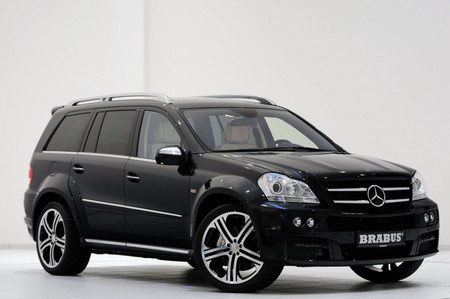
Brabus GL 63 Biturbo picks up where Mercedes AMG leaves off

Mercedes-Benz GL 63 by Brabus

The performance boffins over at AMG keep themselves pretty busy, churning out high-output versions of just about every vehicle in the Mercedes-Benz line-up. Just about, but not quite. For example, if you want a GL-Class family-hauler with the division's stonking 6.3-liter V8 engine, you're SOL. But that's where the aftermarket comes in, and Brabus has arrived at the scene to save the day. And then some.

Not only has Brabus fitted the 6.3-liter V8 to the GL, but they've bolted a pair of turbochargers in the process. And while they were at it, they tweaked the seven-speed auto-box, fitted a big water-to-air intercooler and upgraded the intake, exhaust, brakes, suspension and rolling stock. The result? 650 horsepower and nearly as much torque. That oughta be good for 300 kilometers per hour (186 miles per hour) and hitting 100 km/h (62 mph) in 4.7 seconds along the way.

The Widestar body kit also widens the vehicle's stance, while the interior has been tricked out in custom leather, carbon fiber trim and LCD screens aplenty to keep the kids busy while you focus on maximum velocity. The super-truck will be unveiled in a couple of months at the Geneva Motor Show, but is available for order now from €368,000 ($518k).

[Source: Brabus]

Sunday, January 24, 2010

Review: 2010 Mercedes-Benz E350

2010 Mercedes-Benz E350

A November Nor'Easter had chewed its way up to New England, delivering a cataclysmic combination of rain and wind as we headed out on a late-night errand. Normally, such a prospect requires a potent blend of Italian roast and Krank20 to stay hyper alert. Instead, behind the helm of the 2010 Mercedes-Benz E350 4Matic, the going was serene and confident. In a word: Wow.

These moments of vehicular astonishment have thinned out in the last two decades. Just look around at the automotive landscape. Even more modest conveyances are kitted out like luxury cars of yore, packing tons of tech and safety features that were once the exclusive purview of the world's well-to-do. Can anything be impressive anymore? As a matter of fact, yes. The E350, as it strafed along the pavement, solid as granite and ready for anything, made us feel like true kaisers of the strasse. Horsepower-addicted auto reviewers have complained that the 3.5-liter V6 needs more spinach. Fine. You want speed, spring for the AMG E63 and shut up. But for the above-average family man, the E350 manages to transcend its asthmatic lungs, soft-spoken tiller and supple feet to foment serious respect, if not outright desire.
The new E-Class styling is crisp and classic, making the outgoing sedan look as dated as a cassette Walkman. Clapping eyes on the first pictures of the 2010 models showed a rear quarter panel distinctly reminiscent of a Chevrolet Impala – an obvious cause for alarm. Thankfully, the design translates more handsomely in person. No, that isn't the same milksop capitulation surrounding the Honda Crosstour. Scout's honor, the E350 is a great looking car. With its larger dimensions, the sedan resolves the styling in a classier way than the C-Class sedan and its two-door platform sibling, the E coupe.

Conservatively styled for traditional tastes, there's more surface work in the new body. Ovoid headlamps are now squared-up (one could almost use Ford's non-word "squircles") and the rear lamps swash across the tail more expressively than before. Mercedes-Benz hasn't gone off the Bangled deep-end with its latest E. No, this new idiom is sharper and more modern, with finely-tailored looks that have a certain amount of speed drawn in. There's motion in them thar lines and the details exude an air of automotive finery. Simply put, the E-Class will age well.


And classic styling is what's going on inside, too. The quintessential Mercedes cabin is a swell place to spend time, with the shape of the dashboard reminiscent of the panel in old W124s. But the interior design isn't as dated as that comparison might suggest, as the new E features a large LCD and spiffy gauges in the panel. Drawing a clear line back to its predecessors and packing the kind of high-tech firepower buyers in this class demand, the new E masterfully balances old and new. Although our tester's black ash trim brought the gloom and ash leather upholstery was already showing signs of being doomed to a life of clean-ishness, the pleating on the seats says "1987 300E" and what's wrong with invoking such a modern legend?

The materials, along with fit and finish, seem appropriately rich. There are touches of S-Class here and a dash of C-Class there, but the Mercedes parts bin is populated with good stock, so it feels familial instead of frugal. Lexus may be most recently identified with such fastidiousness, but the E350 displays an obsession with perfection. Even the headlight switch toggles with precision-machined feel, lending an air of importance to even the simplest task. There's virtually no slop in any of the ancillary controls, reiterating that the E-Class is one impeccably crafted automobile.


Around the interior, the expected high points are realized in good form. The optional Drive Dynamic seats act counter to cornering forces and offer a massage feature for those seeking a more intimate relationship with their chariot. The seats are all-day comfortable, but one of the first things we did was disable the groping functionality (we're fine with keeping this liaison platonic). Going with the standard power seats will keep $650 in your pocket, though the massagers are a boon to alertness on long slogs. If bladder-busting drives are your thing, perhaps the only thing better than groping seats and mechanical rollers would be integrated restrooms.

The rest of the technology in the E350 is surprisingly benign. COMAND isn't the epic agita-fest we expected, though the system needs fewer sub-menu steps and can be an outright distraction when delving deep into the structure. It's a good thing the Distronic Plus radar-based speed control is so amazingly good. Intervention is finely modulated, and the car even slowed itself to a momentary stop and accelerated again through a traffic circle with more aplomb than your average driver. The $3,950 Premium 1 package adds features many buyers will want, including hard-drive navigation, voice control, satellite radio, a rear view camera, heated seats and a dandy-good Harman Kardon Logic 7 audio system, while the $2,900 Driver Aid package installs the Distronic system, along with blind spot and lane monitoring. The sheer distraction of trying to use an iPod with the audio system means your eyes will be off the road for long stretches, so it's almost a necessity that the E can mostly drive itself. And while COMAND has lots of functionality built in, it's more clunky than iDrive or MMI, and stands a chance at flummoxing drivers just looking for directions to Bar Americain.


Thankfully, most of the functions have dedicated controls on the center stack. Switches for the ventilation system seem particularly well-considered and Mercedes employs little flippers that make setting temperature, fan speed and mode easy, with a clear bar graph displaying your settings. A column shifter for the seven-speed automatic transmission isn't exactly a sporting touch, but there are steering-wheel mounted shift buttons if you want to pose. Visibility out of the cabin was reminiscent of the low-cowl days of yesteryear, coupled with an airy atmosphere thanks to the glass roof. The biggest ergonomic gaffe is just Mercedes being Mercedes. To wit, the position of the cruise control stalk is exactly where the uninitiated driver expects to find the turn signals. You'll eventually adapt, but there's a period of unintentionally changing lanes without signaling, and not for lack of trying.

Though the E you see in the photos is a rear-drive example, our tester was equipped with Mercedes' all-wheel drive 4Matic system. Without trying the car in ultra-low traction situations (it was a downpour, not a blizzard), the AWD hardware didn't come into serious play as we formed our impressions of the driving experience. The ride proved just short of amazing, with a massively rigid bodyshell allowing the suspension to be topped up with whipped cream without shuddering and flopping about. Despite the plush ride, the E350 isn't all marshmallow – it's just more cushioned than a BMW 5 Series. And while there's a good amount of bodyroll, the E still feels reassuring as it heels over and takes a set. As you'd expect, this is not the sedan for hooliganism, though it won't make a total fool of itself if you force it to play along.


The helm is much sharper than Benzes of yore and even offers some feedback. Watching the tri-star hood ornament rotate through a turn like a gunsight makes up for having to correct mid-corner – something we experienced on more than one occasion. And for a 90-degree V6, the 268-horsepower 3.5-liter is impressively serene. Silent at idle, the engine is smooth and makes the most of its modest pride of horses when wound hard. It even snarls when caned, but it's nothing to set your heart aflutter. The buttery-smooth seven-speed automatic is best left to its own devices, so just ignore the silly, useless paddles and let the trans slides through its ratios without so much as a head bob. Despite having a cogtacular ratio spread, there's only so much power deficit the gearing can counter for, and the E350 is comparatively down on snort. Fuel economy also suffers a bit from the whipping you'll do to keep up.

The E350's stock in trade is being the seriously solid benchmark that we've come to expect. The extra-strong structure feels unbreakable, and there's a seemingly endless well of tricks to keep vibrations and harshness from entering the cabin. The brakes, too, proved unflappable – no surprise considering the myriad of electronics employed to keep the rotors dry and primed for action. Yet despite all the active and passive safety features (nine airbags, active headlamps and the Pre-Safe system which rolls up the windows, closes the sunroof, adjusts the seats and pre-tensions the belts if it senses an impending crash), the E350 doesn't drive like an autonomous space capsule – even when it suggests you stop for coffee when it detects drowsiness.


In the new E's most recent TV spots, Mercedes touts the decades of experience and innovation it brought to bear on the all-new E-Class. Strangely, this is one of those rare instances when marketing speaks truth. While the excellence does cost (the E350 starts at $49,000 and our tester rang in at around $60k), you won't feel ripped off, even if you opt for the V6. If past E-Class Benzes have lost the marque's storied status, the E350 is finally the vehicle to win it back, come hell, highwater or Nor'Easter.