Monday, November 30, 2009

Review: 2010 Buick LaCrosse CXL

2010 Buick LaCrosse CXL

With great fanfare, General Motors has introduced the 2010 Buick LaCrosse, a vehicle with which the automaker hopes to jump-start a sweeping brand transformation for the tired Tri-Shield. For Buick to be a success in GM's post-bailout, post-bankruptcy era, the brand must dump its well-deserved reputation as the preferred marque of last-time buyers. (Average age of previous-model LaCrosse buyer: Around 70.) For better or worse, as it scrambles to get more – and younger – drivers behind the wheel, Buick has elected to position itself as America's Lexus in a bid to give itself some premium cachet.

Frankly, that's a pretty tall order, but if first impressions mean anything, the Buick LaCrosse might be crowned GM's savior on appearances alone, because it's that attractive, especially compared to the fish-faced namesake it replaces. The 2009-and-prior LaCrosse looks like the unfortunate love child of a third-generation Ford Taurus and a Mitsuoka Orochi. Or, put plainly, it looks like some ugly Chinese car. By comparison, the 2010 LaCrosse is classy and stylish. Therein lies the delicious irony: the 2010 Buick LaCrosse's glitzy looks were, in fact, jointly developed with GM China's design team. Go figure, and be thankful. In the metal, this ride draws plenty appreciative stares.

Viewed in profile, the 2010 Buick LaCrosse's fast-looking roofline sweeps down into a short, high rear decklid. Acres of sheet metal reside under the greenhouse, and to mitigate the ensuing slab-sidedness, the designers employ a Lexus-style chrome strip along the bottom of the door panels along with a corresponding indent in the bodywork. What really breaks up the monotony, however, is the 21st-century version of the Buick sweep-spear, implemented here as a crease in the bodywork that turns the LaCrosse's chunkiness into a something a bit more voluptuous-looking. The LaCrosse CXL's chrome-finished, seven-spoke 18-inch wheels fill out the wells nicely, and the 19-inchers you get with the top-spec Lacrosse CXS would look better proportioned still.


Arched headlamps flank Buick's signature waterfall grille, and the lower bumper openings turn down into a frown at the corners. It makes for a sterner look than the bewildered, four-eyed face sported by the old LaCrosse. The hood ventiports on the new LaCrosse are also purely ornamental. Moving aft, tail lamps resembling chrome-edged flower petals finish off the rear end. From an exterior styling perspective, the new Buick LaCrosse drips curb appeal all over the sidewalk.

The good news continues with the swanky interior, elegantly decked out in a tasteful two-tone motif in the case of our tester. Material quality gets a solid thumbs-up, and GM goes so far as to add stitching to some of the soft-touch door and dash surfaces, making them look as though they're wrapped in leather, when in fact it's merely a visual sleight-of-hand. Don't laugh – it works. The front seats are comfortable and reasonably bolstered, but the best seats in the house may be one row back. At 40.5 inches, rear seat legroom is very good. That's more than the Pontiac G8 – no slouch in the department at 39.4 inches – just shy of the Toyota Avalon's 40.9 inches, and simply obliterates the 35.9 inches you'll get as a backseater in the Lexus ES350. If you don't get to ride shotgun in the LaCrosse, it's no penalty to be relegated to the back, where you can sit back and enjoy the quiet cabin in great comfort. Go ahead, cross your legs. You can.


A sweeping, beautifully-designed cockpit envelops the driver and front passenger in leather, attractive woodgrain and a variety of soft-touch surfaces. Beyond GM's new corporate steering wheel (leather-wrapped, heated and with woodgrain on top) is a padded binnacle shrouding the LaCrosse's attractive and unique tach and speedo gauges. Their ice blue illumination is further accented by cool ambient lighting that dresses up the instrument panel at night. The snazzy-looking layout layout stumbles a bit when your eyes land on the parts bin-special driver information and radio displays – similar to the ones you'll find in the Chevrolet Camaro, Equinox and GMC Terrain. They work fine and are eminently readable, but the look isn't as polished as, say, the audio display in the Cadillac CTS (or something in that general vein), whose higher-res presentation would better fit the premium theme GM says it's trying to get at with the revamped Buick.

The LaCrosse's center stack features the familiar, two-dial radio setup you expect to find in a GM car. Below the station preset keys, you'll find a total of 24 additional buttons, controlling various other audio and HVAC features. In daylight, the arrangement is a bit busy, but still usable. At night, however, it can be hard to discern what's what, as the area becomes a jumbled sea of little blue words and icons. One rainy evening, the windshield fogged up quickly and we spent more time looking down at the instrument panel for the proper buttons to make the adjustments than we would normally be comfortable with, particularly at highway speeds. The wheel-mounted cruise and radio controls work great, and there are enough station presets that we seldom needed to reach for the manual tuning dial at all.


While the LaCrosse's steep A-pillar angle helps make the car look great on the outside, it wreaks havoc on driver visibility, effectively blocking your view of any street you plan to turn left onto. Likewise, the rear view is compromised by the LaCrosse's high rear deck, which contributes to rearward visibility that's downright SUV-like. It's a trend that's maddening and unlikely to go away anytime soon. A standard-equipment rear-view camera, as GM offers on the cheaper GMC Terrain, would work wonders here. Alas, a cam is only available in the laCrosse if you order the stereo with nav system. Without it, backing out of a space in a crowded supermarket parking lot can become a white-knuckle affair, since little kids are obscured by the high rump.

Trunk space is actually pretty skinflint, especially for a big vehicle, at just 13.3 cubic feet. It's a shame, too, as the trunk itself is deeper than the short rear deck would suggest. We slid a stroller in lengthwise without even folding back the handle, and it fit with room to spare. The issue is that the usable area is sacrificed in the name of big, intrusive gooseneck hinges. The hinges are blocked off, so there's no danger of crushing your cargo, but the space they occupy would have added a sizable amount of cargo-carrying capacity had GM set up the trunk with struts instead. It's a missed opportunity. Yes, the Lexus ES uses a similar setup, but that's no excuse.


But our biggest disappointment came from the 252-horsepower and 215 pound-feet of torque provided by the direct-injected 3.0-liter V6 sitting under our all-wheel-drive LaCrosse CXL's clamshell hood. In this 4,196-pound car – yes, it's a porker – the 3.0-liter six is a leisurely performer at best and overmatched at worst. The middle-spec bent six is perfectly acceptable in around-town runabout duty, but when you come upon a situation demanding more power, like highway passing, frustration sets in as the oomph on tap is hardly on-demand. Flipping the six-speed auto into manual mode offers little relief; in our experience, it only served to make the faint noise emanating from beyond the firewall a little more audible, with no real difference in tangible forward momentum.

The 280-hp and 259 lb-ft of twist from the 3.6-liter V6 in the stepped-up LaCrosse CXS clearly seems like the better choice for this car, and we wish it's what we had when the LaCrosse paid its visit to our garage, but you also forego the option of all-wheel drive by opting for the top trim level. If you live in a region where you want the added confidence that four-wheel grip bestows in winter weather, you're stuck with the 3.0-liter. Given our experience with the 3.0-liter V6, the 2.4-liter four-cylinder that'll be available as an option in the base CX trim (the 3.0 V6 is standard) doesn't seem like something we would ever see ourselves going for.


In a separate aside, the mere presence of the LaCrosse CX, which comes with standard cloth seating and steel wheels, doesn't exactly jibe with the whole Lexus-alternative meme that the marketing department is working so hard to cultivate. Look for something like that at a Lexus store, and the salesman will gently direct you to his Camry-selling brethren across the street. Likewise, the LaCrosse CX seems like an equipment mix better suited to a Chevrolet dealership. Airport rental, anyone?

Behind the wheel, the LaCrosse's hydraulically-assisted steering delivers great overall response and feedback, but a smidge less power assistance would be more than welcome. On-center feel is good, and the sedan stays pointed where you want it without any vagueness or slop in the wheel. Dynamically, the Buick is competent if not exciting. Hell, it's actually pretty boring, which, when you consider that the Lexus ES is the named benchmark, is not necessarily a derogatory judgement. Sound isolation is excellent, engine noise is well-muted and if your local DOT isn't known for maintaining silky-smooth roads, the imperfections you drive over are swallowed up ably, with little more than muted thumps making themselves heard and felt inside. Best of all, the suspension delivers comfort without resorting to the wallowy feel that characterized "American luxury" for so long. Drive it hard into a corner, and the LaCrosse protests with understeer, but the reality is that it's not a car that begs to be driven hard in the first place. Refinement and good manners rule the day here, and the LaCrosse is at its best when you take it easy and let it coddle you.


In the end, we walked away from the 2010 Buick LaCrosse CXL impressed, but not completely blown away. If you're looking for excitement, you'll find it in the car's dazzling visual presentation, but its mild-mannered demeanor means it can be a bit of a snooze from behind the wheel. Then again, if the 2010 Buick LaCrosse is the American Lexus that GM so desperately wants it to be, maybe this blend of outward glitz and reserved composure is exactly what the doctor ordered. Time will tell.

[Source: Autoblog]

Thursday, November 26, 2009

Ferrari Enzo

Ferrari is working hard to meet the requirements set up by the European government for the new CO2 laws that will begin in 2012 by downsizing the carbon footprints by almost 40%.Ferrari is even looking to downsize the new Enzo.

Awhile back there were rumors that Ferrari was looking into a twin-turbo V8 to replace the Enzo’s 6.0L V12 powerplant. Now the Ferrari technical director Robert Fedeli told AutoWeek in an interview that Ferrari is developing both a V8 and a V12 to cover its exotic options.

The Italian automaker states that it is not interested in advancing the power wars, and that driving dynamics will take precedence over brute force. IfFerrari manages to keep the weight to 2,200 lbs. using technology hinted at with the FXX Mille Chile concept, then even the vaunted Veyron could have more competition than it can handle. They just need to make sure that drivers know exactly how to drive the new lightweight cars. If not than 2012 will be the year of crashes more so than this year.

http://www.exoticcars.ws/cars/ferrari-enzo.jpg

http://www.car-catalog.com/sports_cars/ferrari_enzo.jpg

http://www.egmcartech.com/wp-content/uploads/2007/05/ferrari_enzo_hit_by_bus_300000_1.jpg

http://www.hot160.com/images/ferrari%20enzo.jpg

http://static.howstuffworks.com/gif/ferrari-enzo-2.jpg

Ferrari F430 Challenge

One of the highlights at the Ferrari stand at the 61st Frankfurt Motor Show will be the world preview of the F430 Challenge, the 8-cylinder berlinetta-derived competition car that will be taking part in the Ferrari Challenge Trofeo Pirelli from the 2006 season.

http://cdn-www.rsportscars.com/images/ferrari/2006-ferrari-f430-challenge/f430ch06_011600_w800.jpg

Ferrari has reaffirmed the strong link between its GT and sporting divisions with the new F430 Challenge which is specifically designed to meet the expectations of its sportier clients. The F430 Challenge retains the same general look and 490 hp engine as the road-going version. However, it also incorporates a large number of significant track-oriented modifications and a host of new features not seen in the car currently used in the series, the 360 Challenge, which it joins on the track next season and completely replaces in 2007.

An intensive series of development tests held at Fiorano and other prestigious circuits have honed the F430 Challenge's talents too. In fact, it offers a stunning series of features sure to meet with the approval of its drivers. As ever, the transfer from Formula 1 is significant, particularly with regard to the braking system which uses carbon-ceramic material (CCM) - a first for a Ferrari sports competition car.

http://cdn-www.rsportscars.com/images/ferrari/2006-ferrari-f430-challenge/f430ch06_061600_w800.jpg

The electronic gearbox is also F1-derived and works in exactly the same way as the one used aboard the Grand Prix car. Thanks to a sinterised two-plate clutch and specific software, it also offers the same gear-changing times as the road-going F430 (150 ms) in the much more extreme track conditions. Fifth and sixth gear ratios have also been modified with respect to the road-going version as has the final drive ration order to make the very most of the engine on all the circuits where the F430 Challenge will race.

http://cdn-www.rsportscars.com/images/ferrari/2006-ferrari-f430-challenge/f430ch06_w800.jpg

Ferrari California

The first official photographs have been published of the Ferrari California, the latest addition to the new generation of Ferraris launched in 2004 with the 612 Scaglietti and added to more recently with the 430 Scuderia.
The Ferrari California joins the Prancing Horse's 8-cylinder family which has always been defined by power and performance. It also flanks the flagship 612 Scaglietti in the prestige sporty Grand Tourer segment.
http://www.jackzap.com/wp-content/uploads/2009/07/ferrari_california-8891.jpg
The new Ferrari California will satisfy even the most demanding of owners in term of its superb vehicle dynamics and driving pleasure. The new model will be available exclusively as a convertible with a folding hard top. Both chassis and bodywork are aluminium, in line with the rest of the current range. The California will be powered by a new V8 engine mounted for the first time in the marque's history in the mid-front position.
http://allworldcars.com/wordpress/wp-content/uploads/2008/05/2009_ferrari_california_many_colors.jpg
In line with Ferrari tradition, the new model also features several innovations. Apart from its folding hard top, these include the original 2+ concept which guarantees exceptional versatility of use in the rear of the car. The California's 4,300 cc V8 engine features direct fuel injection and a "flat" crankshaft. It generates 460 CV at 7,500 rpm with a torque curve that enhances vehicle dynamics and provides maximum driving pleasure which is typical for Ferrari.
http://www.superreplicas.org/images/FerrariCalifornia.jpg
As per the traditional Ferrari transaxle layout, the engine, which allows the Ferrari California to sprint from 0 to 100 km/h in less than 4.0 seconds, will be coupled to a 7-speed dual clutch transmission that boosts the car's performance while enhancing the driving pleasure, improves ride comfort and reduces fuel consumption and emissions (c.310 g/km CO2). The comfort is further enhanced by a new multilink rear suspension system. The Ferrari California is also equipped with the exclusive F1-Trac traction control system which made its debut on the 599 GTB Fiorano and has been further honed to suit the typical driving conditions expected for this new GT. Brembo brakes featuring carbon-ceramic material disks as standard guarantee superbly efficient braking.
http://autos.webhostingoverview.com/wp-content/uploads/2008/05/ferrari-california-photos-new-1.jpg
In addition to sporting the marque's classic styling cues, the cabin has also been beautifully trimmed using quality materials by Ferrari's own skilled artisans. New accessories and equipment, such as the seats, steering wheel, instrument panel and infotainment system, together with optimised aerodynamics ensure that this is a highly ergonomic and enjoyable car to drive regardless of whether the top is up or down.

Ferrari FXX Cars

The FXX is the most advanced GT ever created at Maranello and its mission is to involve Ferrari's most valued Clients as genuine Prancing Horse Test Drivers in their own right. The wealth of data and experience gathered in the course of this very special programme will be exceptionally important.

In fact, the feedback from these highly skilled, non-professional Client Test Drivers will be compared and supplemented with suggestions from Michael Schumacher, Rubens Barrichello and Ferrari's professional in-house Test Drivers.

http://cdn-www.rsportscars.com/images/ferrari/2005-ferrari-fxx/ferrari_fxx8_1600_w800.jpg

Every Client who signs up for the FXX project by purchasing one of the estimated 20 or so cars being built, will actually be joining Team Ferrari, and will have his driving experiences at the wheel of this new car monitored directly by the Prancing Horse's technicians and specialists.

The FXX has not been homologated for road use and thus will not be a competition model. It will be used exclusively on the track as part of a specific ongoing research and development programme featuring this first ever group of Client Test Drivers.

http://cdn-www.rsportscars.com/images/ferrari/2005-ferrari-fxx/ferrari_fxx7_1600_w800.jpg

The FXX is powered by an imposing 6,262 cc V12 engine that can punch out over 800 bhp at 8,500 rpm. Its gearbox is the result of the transfer of F1 strategies, delivering gear change times of under 100 ms. This is almost as fast as the F1 single-seaters, themselves the absolute pinnacle of current technological achievement.

http://cdn-www.rsportscars.com/images/ferrari/2005-ferrari-fxx/ferrari_fxx1_1600_w800.jpg

After a careful client order selection process, the first FXXs will be delivered by the end of this year. The initial testing of the definitive car is currently taking place at Fiorano. The FXX and the relative package cost a total of 1,500,000 euro (excluding taxes) (approx. $1,790,000) and applications to join the programme are being evaluated by a special in-house committee.

Ferrari

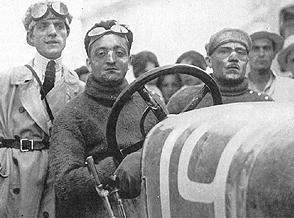
Enzo Ferrari was born in Modena Italy on February 18 1898. He came from a well to do family that owned a metal foundry making railroad parts, they were the first in his town to own a car.

When WWI came Enzo's father and brother (Dino) were drafted into the Italian army, whom both died from influenza in 1916. Enzo was forced to leave school to run the foundry, when the business collapsed he started work as a metalworker at the Modena Fire Brigade workshop as a turning instructor in order to support his widowed mother.

Enzo Ferrari 1919

Enzo himself was later drafted into the Italian army where he worked shoeing mules for the mountain artillery, after a few months he becomming seriously ill and was released from the military. Not interested in going back to shcool and against his mothers will, he found work as a test driver in Turin in late 1918. Enzo then moved to Milan to work at CMN (Costruzioni Maccaniche Nazionali) as a racing car driver. His first real race came in the 1919, the Parma-Berceto, he then entered the Targa Florio that same year. Enzo then founded Scuderia Ferrari, (literally means Ferrari Stable) who were mainly sponsors and trainers for Alfa Romeo.

THE PRANCING HORSE EMBLEM


The famous symbol of Ferrari is a black prancing horse on yellow background, usually with the letters S F for Scuderia Ferrari.

The horse was originally the symbol of Count Francesco Baracca, a legendary "asso" (ace) of the Italian air force during World War I, who painted it on the fuselage of his planes. Baracca died very young on June 19, 1918, shot down on Mount Montello after 34 victorious duels and many team victories. He was the Italian ace of aces and he soon became a national hero.

Baracca had wanted the prancing horse on his planes because his squad, the "Battaglione Aviatori", was enrolled in a Cavalry regiment (air forces were at their first years of life and had no separate administration), and also because he himself was reputed to be the best cavaliere of his team.

Ferrari Fiorano

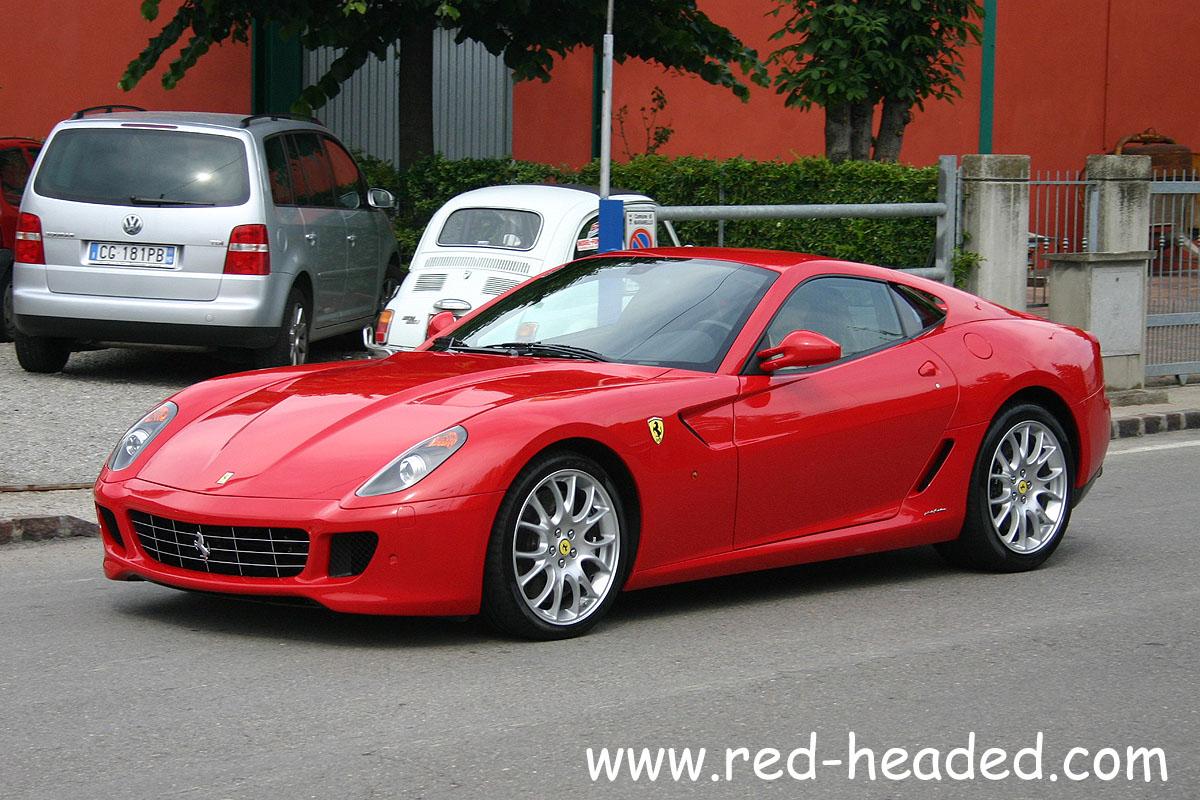
The GTB as in Gran Turismo Berlinetta was named after the most famous Ferrari berlinettas ever built; and 599 to reflect the displacement of its V12 engine divided by 10. The stunning new all-aluminium two-seater that Ferrari is unveiling at the Geneva Motor Show is summed up rather succinctly by its own name and delivers everything that this promises. The Ferrari 599 GTB Fiorano, in fact, sets a new benchmark of excellence in the sports car world.

http://www.ferrarifaqs.com/wp-content/uploads/2006/11/599.jpg

This new model was designed with several specific objectives in mind: to surpass the intense driving pleasure of such renowned models as the F40, to guarantee stunning performance courtesy of its highly innovative content and technology transfers from the F1 single-seaters, and to deliver superior standards of roominess, comfort, ergonomics and safety. The result is the absolute pinnacle of achievement in terms of thoroughbred Ferrari sportiness and technology.

http://moryhp88.files.wordpress.com/2008/02/ferrari-fiorano.jpg

The new Ferrari 599 GTB Fiorano sprints from 0 to 100 km/h in an astonishing 3.7 seconds and boasts a top speed in excess of 330 km/h. However, it is still the new model’s uniquely innovative content that guarantees superior driving pleasure, handling and sportiness. The technical specification of the engine speaks for itself: 5999 cm3 displacement, a specific power output of 103 hp/litre.

http://www.desktopcar.net/wallpaper/24950-2/Ferrari_Fiorano_wallpaper.jpg

Twin overhead camshafts per cylinder bank boast continuously variable timing on both inlet and exhaust cams to optimise torque delivery and drivability at both low and high revs. A twin-plate, low inertia clutch in unit with the engine also helps lower the centre of gravity.

Chain driven distribution reduces noise and is maintenance-free. The Fiorano’s engine delivers a maximum torque of 608 Nm at 5,600 rpm and means that the car pulls well at all engine speeds.

Ferrari 599 GTB

Ferrari is on a trend when it comes to producing convertibles. First we caught a glimpse of the F430 Spider dazzled the world with its beauty and despite the new convertible look it has become Ferrari’s most popular model. Next we saw the Ferrari California. The jury is still out on this one.

Next in line is a new roadster version of the 430 Scuderia – which will make its official debut at Mugello sometime in November. But that isn’t all. New spy shots have recently surfaced and it looks like a convertible version of the 599 GTB Fiorano.

In the spy shot the Ferrari testing mule has a roof – but according to reports the roof is not fit on perfectly to the top of the car and the color does not match the body of the car. Many believe that Ferrari has plans for a successor to the Superamerica version of Fiorano’s 575 predecessor and the 550 Barchetta.

The former Ferrari was equipped with an unusual Fioravanti designed glass roof mechanism. This leads us to believe that this new model will use the same mechanism and will use a similar folding hard top. The convertible will most likely use Ferrari’s new quick-shifting SuperFast3 dual-clutch transmission to help shift the extra weight. We hope to have more details and pictured straight from Ferrari.

Ferrari 599 GTB Fiorano

Fiorano after the circuit Ferrari uses to hone the performance of its track and road cars; GTB as in Gran Turismo Berlinetta after the most famous Ferrari berlinettas ever built; and 599 to reflect the displacement of its V12 engine divided by 10. The stunning new all-aluminium two-seater that Ferrari is unveiling at the Geneva Motor Show is summed up rather succinctly by its own name and delivers everything that this promises. The Ferrari 599 GTB Fiorano, in fact, sets a new benchmark of excellence in the sports car world.


Ferrari 599 GTB Tuning

Ferrari 599 GTB Tuning

Ferrari 599 GTB Tuning

Ferrari 599 GTB Tuning

Ferrari 550 Barchetta

The 550 Barchetta Pininfarina is the perfect interpretation of the classic, open-top front-engined V12 Ferrari sports car, complete with modern styling and technology.

The 550 Barchetta Pininfarina has a traditional barchetta-style cut to the windscreen, around 100 mm lower than the 550 Maranello, with a body-coloured finish to the lower section of the surround. Furthermore it reflects the past as a model aimed exclusively at open-air use, providing just a manual soft-top for emergency use.

Functional and unadorned with a simple manual soft-top, the barchetta-style solution has enabled Ferrari’s engineers to offset the additional weight gained by reinforcing the chassis and fitting rear roll bars. Consequently the 550 BarchettaPininfarina weighs no more than the 550 Maranello. The 550 Barchetta Pininfarina ’s exclusive design includes other distinctive features such as Ferrari badges on the wheelarches, two-piece alloy wheels and a unique aluminium fuel filler cap. The car can be ordered in any colour in the Ferrari range.

http://www.ferrarifaqs.com/wp-content/uploads/2006/10/ferrari-550.jpg

The car’s interior reflects its pure, sporting character, with leather and carbon-fibre racing-style seats (a four-point racing harness can also be ordered, depending on market availability). The driving position is enhanced by ideal ergonomics, with the wrap-around line of the dash attractively continuing across to the central tunnel and ensconcing the driver.

The sporting effect is completed by the interior’s carbon-fibre and black Lorica finish, and Lorica is also used to trim the central tunnel and the rear of the cockpit. Lined with impact-absorbing material, the rear roll bars, attractively trimmed in leather, provide additional structural rigidity as well as protection for the occupants in case of an accident. The windscreen surround has been redesigned and incorporates a high-strength steel tube to withstand the car’s weight in a roll-over situation.

http://sgriswold.com/cars-for-sale/ferrari-512-bb/ferrari-512-bb-1.jpg

https://blogger.googleusercontent.com/img/b/R29vZ2xl/AVvXsEh9SC2YctqUiiiA_h16QleyuFXZW4f6yJwx8BxlQQFQljte-56FS7R4OGxMqvLR82pXClvWygkCYKY_fwxbZ21clYtLcoljVR92LjRqIdLHa4-e_S-T8w5FTgDWft7OyLEHYfCNwNdU2d23/s400/Ferrari+512BB+(1).JPG

http://www.carfolio.com/images/dbimages/zgas/models/id/3681/76_512_BB_r.jpg

http://www.seriouswheels.com/pics-def/Ferrari-288-GTO-Racecar-Red-Front-Angle-4-st.jpg

Ferrari 512 BB

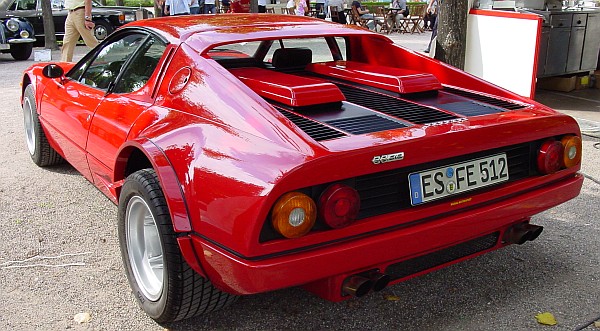
New European legislation on noise and pollution forced Ferrari Company to make major modifications to the 365 BB and so, in 1976, the 512 BB was born. Exterior changes included larger wheels, a new front spoiler and extra cooling ducts, while the engine was enlarged to nearly 5 litres.

However, the new larger engine was actually down on power and performance as legislation had enforced a lower maximum rpm. This was addressed, to a degree, in 1981 with the addition of Bosch fuel injection.

http://www.dennigcars.org/models/pictures/ferrari_512_bb.jpg

While many believe it does not have the charisma of its predecessor the Daytona, there can be no denying that the BB has its own place in supercar history thanks to its stunning looks and mid engine design.

http://www.transportspecs.com/images/decades/ferrari_512_bb.jpg

http://www.madle.org/og06f512bb.jpg

http://sgriswold.com/cars-for-sale/ferrari-512-bb/ferrari-512-bb-1.jpg

http://www.globalsupercars.co.uk/gallery/Shows%20and%20Events/MPH%202007/slides/Ferrari%20512%20BB%200003.jpg

Ferrari 456M

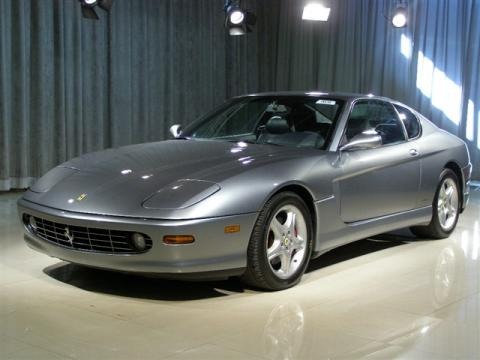
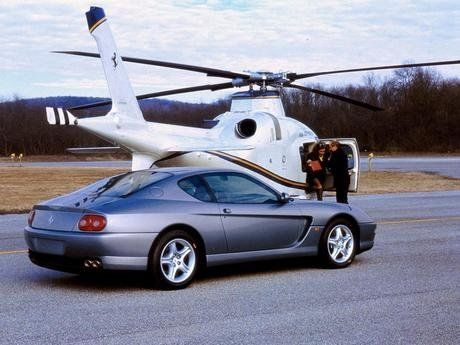
Unlike most Ferrari models, past and present, the 456M GT is a 2+2 berlinetta coupe, which means it has a snug two-place rear seat in addition to the customary front buckets. As the company puts it, this is “the evolution of a very popular concept amongst Ferrari clients who want a real Ferrari with the practicality of rear seats for two additional passengers.”

In contrast to the mid-engine 360 Modena, Ferrari’s least costly model that is equipped with a V-8 behind the seats, the 456M GT has a V-12 engine mounted up front. The list price for the 456M GT is $226,975, while the automatic-transmission GTA goes for $232,170. That makes the 456M Ferrari’s most expensive model in the U.S. market at least until the 550 Barchetta goes on sale in spring 2001.

Ferrari sold about 4,000 cars worldwide during 2000, the company’s eighth year of increased sales. More than 1,000 went to North America, with California accounting for 22 percent of sales. Plans for 2001 are identical, with no more than 4,000 cars expected to go out the door.

“Berlinetta” translates to “little sedan,” which is the Italian way of describing what Americans call a two-door coupe. Like otherFerrari models , the 456M GT was styled by Pininfarina, a legendary Italian design studio that’s been responsible for many illustrious models in the company’s history.

About a foot longer than the 360 Modena, the 456M GT measures 187 inches overall. Body lines are softer than those of other Ferrari models, coupled with a cross-hatch grille and large bodyside scallops. The car’s classic look is accentuated by its long-hood and short-deck profile. Body panels are constructed of aluminum, the chassis is made of steel, and the hood is carbon fiber.

http://www.cartype.com/pics/3641/full/ferrari-456m-gt_side2.jpg

http://www.qv500.com/Ferrari%20456%20P2%203.jpg

http://pictures.topspeed.com/IMG/crop/200602/1998-ferrari-456m-gt-6_460x0w.jpg

http://nysportscars.com/pictures/75264.jpg

http://pictures.topspeed.com/IMG/crop/200910/ferrari-456m-gta-17_460x0w.jpg